
 Cart
Cart
 Sign In




![Book cover number 1 for [In] Complete Justice? The Supreme Court At 75 written by S. Muralidhar published by Juggernaut](https://getmybooks.sgp1.cdn.digitaloceanspaces.com/images/33769382_1.jpg)
Fast Delivery
Multiple courier options

Rs.349
Rs. 499
30% OFF
Inclusive all taxes
This Product is out of stock
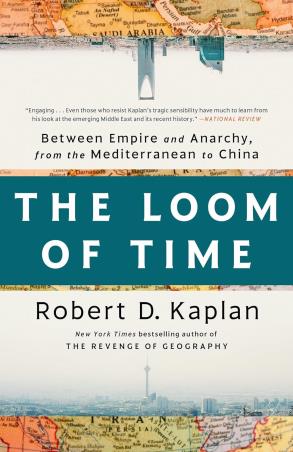
Henry Kissinger, the US national security adviser, traveled to China in secret in July 1971 to meet with senior Chinese officials. Not only did this begin a new era in US-China ties, but also in modern history. The foundations of China's ascent as a global power were strengthened by that visit and the ensuing US-China relationship, which included the US commitment to aid in China's economic development and admit it to the WTO. The leaders of the two nations had a covert agreement that benefited both of them for more than 40 years. In the hopes that Beijing would turn a new political page and adopt Western customs (including democracy), the US contributed to China's economic progress. Four generations of Chinese leaders created their country at the expense of the US as it prospered economically and militarily, exploited its financial might to spread its influence across continents, and expanded its influence. A new Cold battle-style trade battle between the US and China is currently raging, fifty years after Kissinger's landmark visit. Washington is not publicly discussing 'de-coupling' from China, which has started to undermine its global hegemony, but it very well could be. China has already made a name for itself as the dominant force in Eurasia. Even more concerning is the fact that China is posing a military and economic danger to its neighbors, notably those in Asia like Japan, Korea, Vietnam, Taiwan, Australia, the Philippines, Indonesia, and India.
| Author | Sanjaya Baru, Rahul Sharma |
| Publisher | Harper Collins Publishers |
| Language | English |
| Binding Type | Paper Back |
| Non Fiction | History & Politics |
| ISBN13 | 9789356993617 |
| SKU | BK 0153764 |
Rs. 825
Rs. 578
30% OFF
Rs. 999
Rs. 699
30% OFF

Rs. 699
Rs. 489
30% OFF

Multiple courier options

Within 15 Days

100% Secure Payment

Within 1 Business Day

We offers a vast range of e-books, from bestsellers to classics, providing an easy-to-use platform for all readers.
© Copyright 2025 | Logic Soft All Rights Reserved